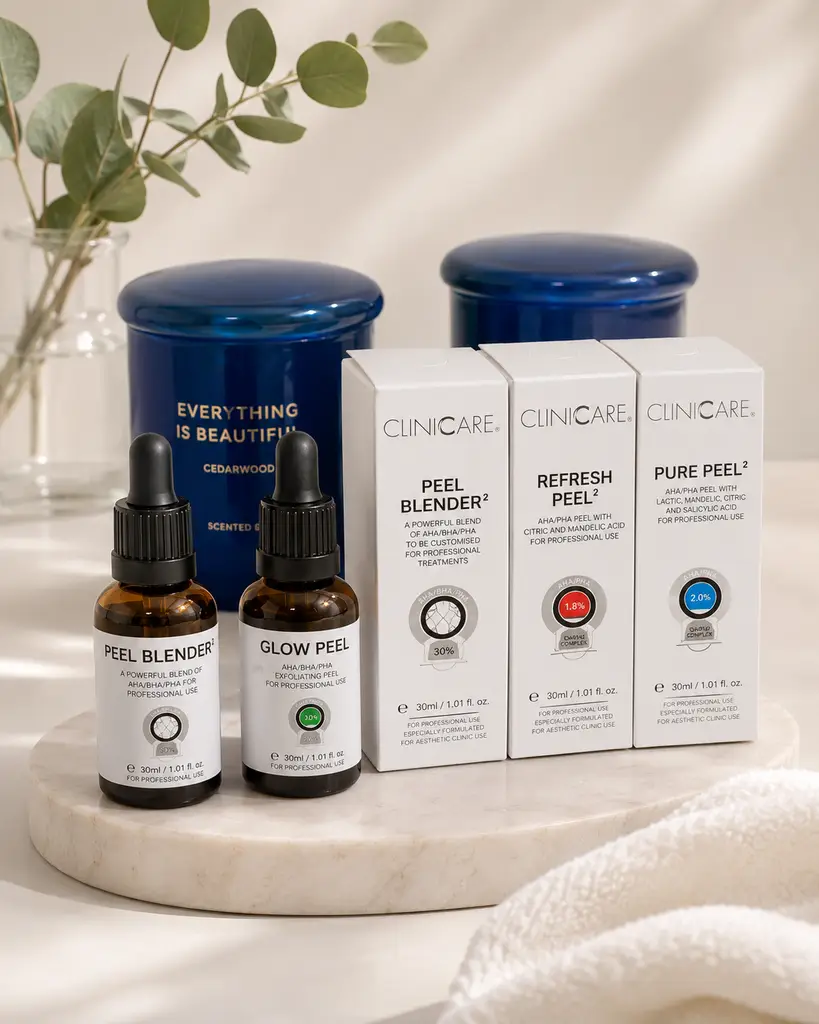
A good chemical peel should not leave you looking dramatically different. It should help your skin look clearer, smoother and more even, while still looking like you. For many people, chemical peels are a useful way to address dullness, congestion, uneven tone, fine lines and certain types of pigmentation without committing to a more intensive treatment.
The right peel is not simply the strongest one. Skin can react differently depending on its sensitivity, natural tone, current condition, home skincare routine and the concern being treated. A professional consultation is where the real value lies: choosing an approach that supports your skin barrier and gives it time to improve safely.
What are chemical peels?
Chemical peels are professional skin treatments that use carefully selected acids or enzymes to encourage the shedding of dead surface skin cells. This process supports natural cell renewal, revealing fresher-looking skin and helping active skincare products work more effectively.
Despite the name, a peel does not always mean visible peeling. Some treatments create a light flake or temporary dryness, while others produce little to no shedding at all. The amount of peeling is not a measure of how successful the treatment has been. Healthy, balanced skin and gradual improvement matter far more than a dramatic reaction.
At Rose Skin Aesthetics, treatment recommendations are based on what your skin needs now, rather than following a one-size-fits-all plan. Sometimes a gentle peel is the most sensible starting point. In other cases, your skin may benefit from preparing with suitable home skincare before any exfoliating treatment is carried out.
What can chemical peels help with?
Chemical peels can be a helpful option for a range of common skin concerns. They are often chosen to improve dull or tired-looking skin, rough texture, uneven skin tone, blackheads, breakouts and enlarged-looking pores. Depending on the peel and individual suitability, they may also support the appearance of fine lines, post-blemish marks and sun-related pigmentation.
For acne-prone or congested skin, a suitable peel can help lift excess dead skin cells and reduce the build-up that contributes to blocked pores. For skin that feels dry or lacks radiance, gentler exfoliation may help create a smoother surface that reflects light more evenly.
Pigmentation requires particular care. Brown marks, uneven tone and melasma can be influenced by sun exposure, hormones, inflammation and genetics. A peel may form part of a wider plan, but it is not a quick fix and cannot replace consistent daily sun protection. In some cases, a more cautious approach is best, especially for deeper skin tones or reactive skin that may be more prone to post-inflammatory pigmentation.
Choosing the right peel for your skin
Peels are commonly described by their depth, but the ingredients, concentration, pH, application method and time on the skin all matter too. This is why it is not helpful to compare treatments only by a percentage on a label.
Superficial peels
Superficial peels work mainly on the outer layers of the skin. They are often used for dullness, mild congestion, uneven texture and early visible signs of ageing. Recovery is usually straightforward, although some redness, tightness or light flaking can occur for a few days.
These peels can suit people who want a refresh with minimal downtime, including those preparing for an event. Timing still matters. It is wise not to try a new peel immediately before a wedding, holiday or important occasion, as no practitioner can predict exactly how your skin will respond.
Targeted exfoliating peels
Some professional formulations are designed with concerns such as blemishes, oiliness, dehydration or pigmentation in mind. A treatment may combine different acids to work in a controlled way, balancing exfoliation with skin support.
This can be useful when skin has more than one concern, such as adult breakouts alongside early lines or pigmentation. However, more active does not always mean better. If the skin barrier is irritated, overly dry or sensitised, introducing strong exfoliants too quickly may make it feel worse rather than better.
Course treatments and combination plans
One peel can give skin a welcome boost, but concerns such as texture, persistent congestion or uneven pigmentation often respond best to a course of treatments spaced appropriately apart. A course allows progress to be assessed and adjusted, rather than pushing the skin too hard in one appointment.
Chemical peels can also sit within a personalised skin plan alongside treatments such as HydroDiamond facials, dermaplaning or advanced microneedling, where appropriate. These treatments are not interchangeable and should not always be performed together. The right order and spacing protect the skin and help avoid unnecessary irritation.
What happens during a peel appointment?
Your appointment should begin with a conversation about your skin, concerns, medical history, current products and previous treatments. This is particularly important if you use retinoids, exfoliating acids, acne treatments or have experienced cold sores, eczema, dermatitis or pigmentation after irritation.
The skin is cleansed and assessed before the selected peel is applied. You may feel warmth, tingling or a mild prickling sensation while it is on the skin. The treatment is monitored throughout, and the peel is removed or neutralised according to the product protocol.
Afterwards, the skin may look slightly pink and feel warm, tight or dry. Your practitioner will explain what is normal for the peel used and give clear aftercare advice. Most appointments are relatively quick, but treatment should never feel rushed. Assessment and aftercare are as important as the application itself.
Aftercare makes a real difference
The days after a peel are when your skin needs calm, consistent care. Avoid picking, scrubbing or trying to speed up any flaking. Pulling at peeling skin can cause irritation and, in some cases, increase the chance of marks developing.
Keep your routine simple and follow the advice provided. This generally means using gentle cleansing, moisturising products and daily broad-spectrum SPF. Sun protection is essential after a peel because fresh skin is more vulnerable to UV exposure, and unprotected exposure can worsen pigmentation.
For a short period, you may also need to avoid retinoids, exfoliating acids, facial scrubs, waxing, steam rooms, saunas and intense exercise. The exact guidance depends on the peel and your skin. If you experience significant swelling, blistering, increasing discomfort or anything that concerns you, contact your practitioner promptly for advice.
Are chemical peels suitable for everyone?
Chemical peels are not suitable for every skin at every moment. Treatment may need to be delayed if you have active irritation, broken skin, a sunburn, an infection or a flare-up of a skin condition. Pregnancy and breastfeeding, medication, recent procedures and a history of certain reactions can also affect which treatments are appropriate.
A consultation is not a formality. It is how a practitioner identifies potential risks, manages expectations and decides whether a peel is the right choice at all. Occasionally, the most honest recommendation is to focus first on restoring the skin barrier with a simpler routine, then revisit professional exfoliation later.
When will you see results?
Many people notice that their skin feels smoother and looks brighter within several days of a superficial peel. Improvements in congestion, texture, fine lines and uneven tone are usually more gradual. Skin renewal takes time, and deeper concerns often need a consistent plan rather than a single treatment.
Results also depend on what happens between appointments. Using the right products, wearing SPF daily and avoiding over-exfoliation at home can make a meaningful difference. A peel cannot compensate for a routine that continually irritates or dehydrates the skin.
If you are considering chemical peels in Brighton or Hove, start with a conversation rather than choosing a treatment from a menu. The best plan is the one that respects your skin, fits your lifestyle and helps you build healthier-looking skin over time.