


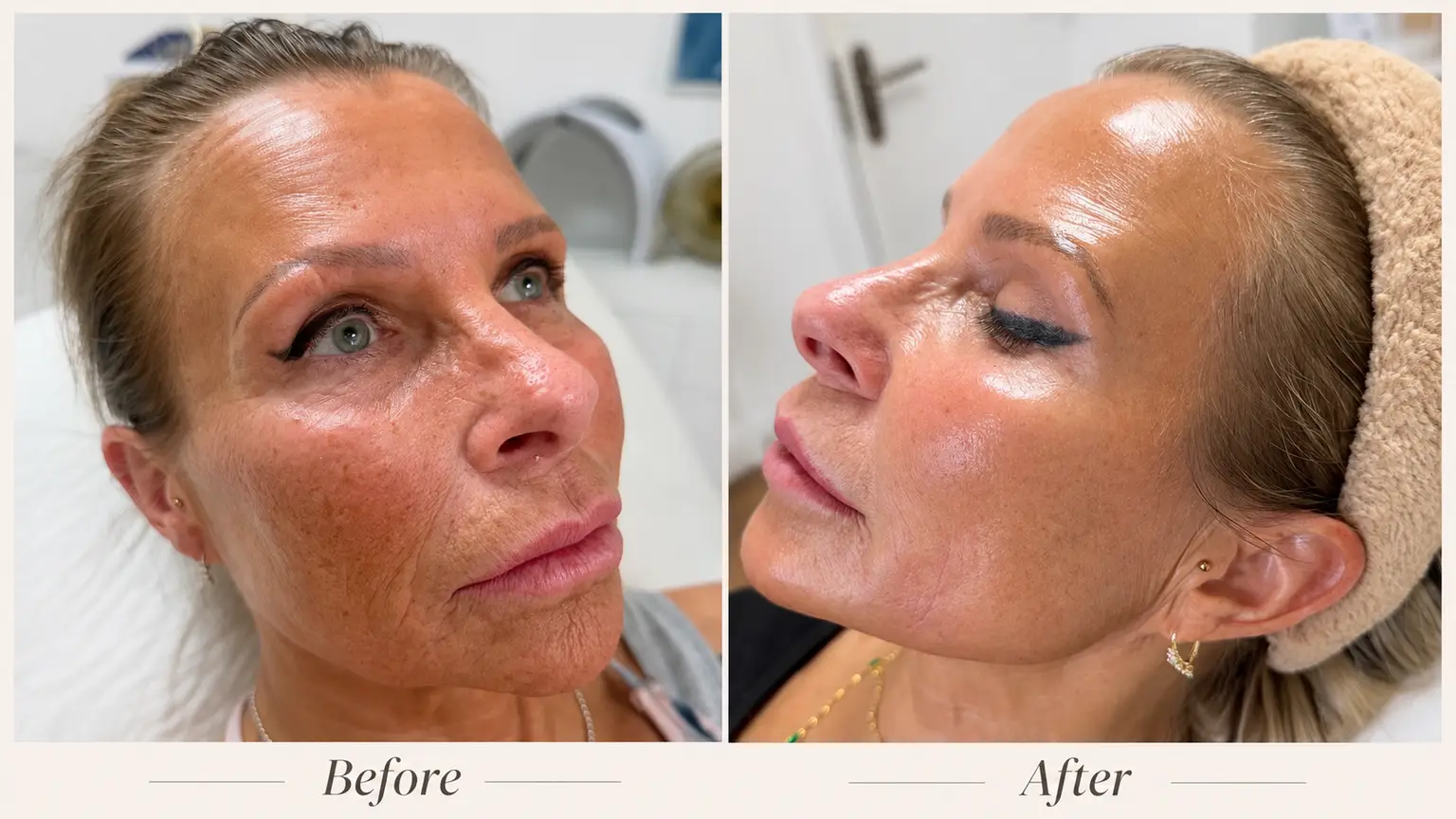
Skin rarely changes dramatically after one facial or a single new serum. The most rewarding improvements tend to come from a considered 6 Month Skin Plan that gives your skin time to respond, recover and build on each stage of treatment.
Whether your concern is pigmentation, dryness, fine lines, acne scarring, enlarged pores or simply skin that no longer feels as fresh as it once did, a longer-term plan can make choices feel far less overwhelming. It replaces rushed decisions with a clear, personalised route towards healthier-looking skin.
Why give your skin six months?
Skin renewal is ongoing, but visible improvements in texture, tone and firmness take time. Treatments that support collagen, for example, do not create an overnight change. Your skin needs time to produce and reorganise collagen after treatments such as microneedling, laser rejuvenation or injectable skin boosters.
Six months also allows for sensible treatment spacing. This matters because doing too much, too quickly is not always better. A plan can include active treatment phases, recovery time and review points, while keeping your skin barrier and everyday skincare routine at the centre of the process.
A good plan is not a fixed package. It should change if your skin changes, your priorities shift or an important event is approaching.
Start with a proper skin assessment
Before choosing a treatment, it helps to understand what is happening beneath the surface. A consultation and 3D skin analysis can look beyond what is visible in the mirror, assessing concerns such as uneven pigmentation, congestion, dehydration, pore appearance and signs of sun damage.
This is also the time to discuss your medical history, current skincare, lifestyle and budget. Some concerns respond best to a course of treatment, while others may need a lighter approach and consistent home care. Honest advice includes recognising when a treatment is not suitable, or when expectations need adjusting.
A realistic 6 Month Skin Plan
Months 1 and 2: Reset and strengthen
The first stage is often about improving skin condition rather than chasing a dramatic result. A personalised skincare routine, gentle exfoliation where appropriate, and treatments such as HydroDiamond facials, dermaplaning or carefully selected chemical peels can help address dullness and surface texture.
For skin that is dehydrated, crepey or lacking luminosity, an injectable skin booster or Profhilo treatment may be discussed following a suitability assessment. These treatments focus on skin quality and hydration rather than changing facial shape.
Daily SPF is essential at this point, particularly if pigmentation is a concern or you are having professional exfoliation or laser treatments. Without good sun protection, progress with uneven tone can be harder to maintain.
Months 3 and 4: Target your main concern
Once the skin is settled, your plan can become more targeted. Advanced microneedling may be appropriate for concerns such as acne scarring, fine lines, uneven texture and enlarged pores. Depending on your skin and goals, this may be combined with hyaluronic acid, polynucleotides or exosomes.
Laser skin rejuvenation can be considered for selected pigmentation and tone concerns. Not every mark or area of redness is suitable for laser, however, which is why an in-person assessment and a clear aftercare plan are so important.
If expression lines are your main concern, anti-wrinkle injections may form part of a plan. The aim should be a rested, natural-looking result that still allows your face to look like you. For volume loss or changes in facial balance, dermal filler may be an option for some clients, but it is never a requirement for healthy-looking skin.
Months 5 and 6: Review, refine and maintain
By this point, early changes in hydration, smoothness and brightness may be becoming more noticeable. Collagen-focused treatments can take longer, so this is a useful time to review progress rather than judge results too soon.
Your practitioner may recommend repeating a treatment, moving into maintenance, or simplifying your routine if your skin is responding well. A plan for a wedding, holiday or milestone event should always allow enough time for treatment response and any expected recovery, rather than leaving everything to the final week.
What makes a plan personal?
The right treatment schedule depends on your skin type, concerns, age, previous treatments and how much downtime feels manageable. Someone focused on pigmentation may need a very different approach from someone whose priority is loss of firmness during menopause. Equally, men who want discreet refreshment may prefer subtle skin-quality treatments rather than any visible change.
At Rose Skin Aesthetics, treatment planning is consultation-led, with natural results and skin health guiding every recommendation. There is no benefit in adding treatments that do not serve your goal.
Healthy skin is not about looking filtered or trying to erase every line. Give yourself time, ask questions and choose a plan that feels realistic for your skin and your life.