


Your skin may feel dry, look dull or suddenly react to products it once tolerated well. You might be noticing pigmentation, fine lines, breakouts, rough texture or a loss of firmness, but feel unsure which treatment would actually help. A facial consultation replaces guesswork with a clear, considered plan built around your skin, your concerns and your comfort level.
At Rose Skin Aesthetics, we believe effective aesthetics begins with listening. The aim is never to persuade you into a treatment you do not need. It is to understand what is happening with your skin, discuss what is realistically possible and recommend a route that supports healthy, natural-looking results.
Why a facial consultation matters
Skincare is not one-size-fits-all. Two people may both describe their skin as sensitive, for example, yet one may have a weakened skin barrier from over-exfoliation while another may be experiencing rosacea-like reactivity, dehydration or irritation from unsuitable products. Treating both in the same way would not make sense.
The same is true of concerns such as pigmentation, acne scarring and ageing. Pigmentation can be linked to sun exposure, inflammation, hormones or previous blemishes. Fine lines can be influenced by dehydration, movement, loss of collagen, sun damage and changes in skin quality. Understanding the likely cause helps determine whether professional skincare, a chemical peel, microneedling, laser skin rejuvenation, injectable skin treatments or a combination approach may be appropriate.
A consultation is also a valuable safety step. Some treatments may need to be postponed or adapted if you are pregnant or breastfeeding, have an active skin infection, are taking certain medicines, have recently had another procedure or are prone to particular skin reactions. This is not about making the process complicated. It is about protecting your skin and giving any treatment the best possible chance of being suitable.
What happens during a facial consultation?
A good consultation should feel like a conversation, not a sales pitch. You will have time to explain what you would like to improve, what you have already tried and what matters most to you. Some clients want a fresher, more rested appearance; others are focused on acne marks, pigmentation, unwanted hair or skin texture. There is no need to know the name of the treatment before you arrive.
We start with your goals
Your practitioner will ask what has brought you in and how long the concern has been present. It can help to be specific about what you see in the mirror and how it affects you. Perhaps foundation no longer sits smoothly, your skin feels less hydrated around menopause, or you want to prepare your complexion gradually for a wedding or other event.
Your preferences matter too. Some people are happy with a course of treatments over several months, while others need a lower-maintenance plan or have a set budget. A personalised recommendation should take these practical details seriously rather than offering a generic answer.
We look at your skin as it is now
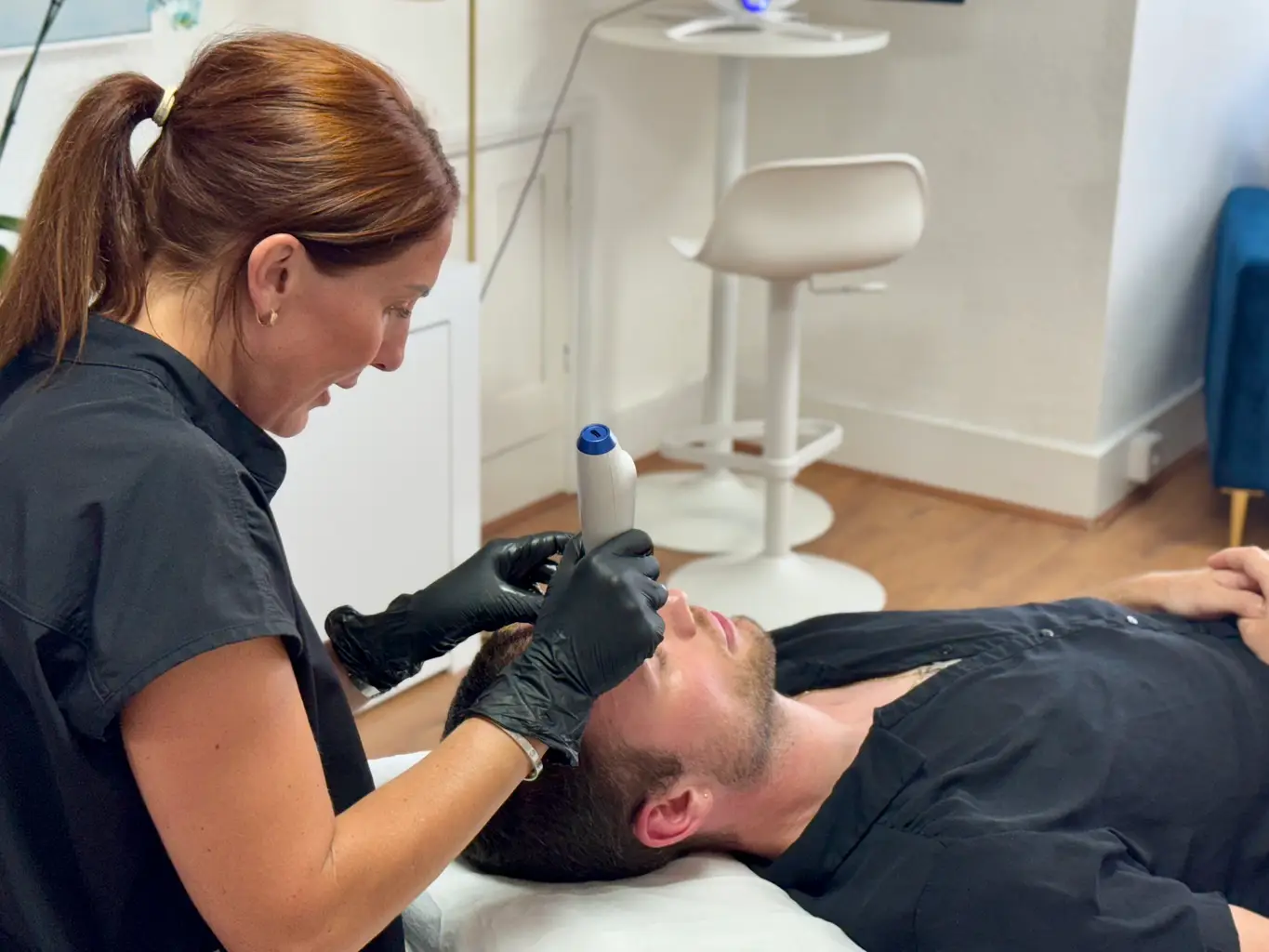
The skin assessment considers concerns such as hydration, texture, pores, congestion, sensitivity, uneven tone, pigmentation, visible redness and signs of collagen loss. At Rose Skin Aesthetics, 3D skin analysis may be used where appropriate to look beyond what is immediately visible on the surface.
This can be particularly helpful when a concern is developing beneath the skin before it becomes more noticeable, or when you want a clearer baseline before beginning a treatment plan. It also gives you and your practitioner a more informed way to review progress over time.
Your skin should be assessed in context. A temporary breakout before your period, irritation after trying a new active ingredient and long-standing acne scarring need different conversations. The goal is to identify priorities, not to find faults in your face.
We discuss your health and treatment history
You may be asked about allergies, medical conditions, current medicines, previous aesthetic treatments, skincare products and any history of cold sores, scarring or skin sensitivity. Be open, even if something seems unrelated. Details such as recent sun exposure, a holiday booked soon, use of retinoids or a past reaction to a treatment can affect both suitability and timing.
If you are considering an injectable treatment, laser treatment or advanced skin procedure, this discussion is especially important. You should understand the expected benefit, likely downtime, possible side effects and aftercare before deciding whether to proceed.
You receive clear, honest recommendations
Once your practitioner understands your skin and goals, they can explain suitable options in straightforward language. For dullness, dehydration and a lack of radiance, a HydroDiamond facial, skin boosters or carefully selected skincare may be discussed. For texture, enlarged pores and acne scarring, advanced microneedling with suitable supportive ingredients may be considered. Pigmentation and uneven tone may call for a tailored combination of skincare, peels or laser treatment, depending on your skin type and assessment.
Sometimes the best recommendation is to begin gently. If your skin barrier is compromised, an intensive treatment may not be the right first step. A period of barrier support and simplified skincare can be more useful than trying to treat every concern at once.
Equally, a treatment may not be suitable for you at all. Honest advice includes knowing when to wait, refer you to a medical professional, or say that the likely outcome does not match your expectations. This protects your wellbeing and builds trust.
Choosing treatment with realistic expectations
A facial consultation should leave you with clarity, not pressure. Most skin concerns improve gradually, particularly those connected to collagen production, pigmentation or scarring. A single facial may give the skin an immediate boost in hydration and glow, while longer-term concerns often respond best to a planned course and consistent home care.
Results also depend on factors outside the treatment room. Daily SPF, suitable skincare, sleep, stress, hormonal changes and sun exposure all influence how skin looks and behaves. Professional treatment can make a meaningful difference, but it cannot stop natural ageing or override every biological factor.
For aesthetic treatments, subtlety is often the right measure of success. The aim may be softened lines, improved skin quality or better facial balance while still looking like yourself. Your practitioner should explain what can reasonably be achieved and avoid promising a particular outcome.
Questions worth asking at your consultation
You do not need to arrive with a prepared list, but asking questions can help you feel confident in your decision. You may want to know why a treatment has been recommended, how many sessions are usually needed, what recovery to expect and when you are likely to see changes. It is also sensible to ask how to prepare, what aftercare involves and whether there are alternatives at a different level of cost or commitment.
If you are considering a treatment before a major occasion, ask about timing. Some procedures need space for the skin to settle, and a new treatment is rarely something to trial immediately before an important event. Planning ahead gives you more choice and less pressure.
You should never feel rushed to decide on the day. Taking time to consider your options is entirely reasonable, especially if you are new to aesthetics or are choosing between several approaches.
Preparing for your appointment
Come as you are, ideally without heavy make-up if possible, so your skin can be assessed accurately. Bring details or photographs of products you use regularly, and let your practitioner know about recent treatments, skin reactions and any upcoming travel or events. If you have images that show how your skin has changed over time, they can also be useful.
Try not to introduce several new products just before your appointment. Keeping your routine stable makes it easier to understand how your skin is currently behaving. Most importantly, be honest about what you want. Whether you are seeking a discreet refresh, support with a persistent concern or a more structured skin plan, the right approach starts with a conversation you feel comfortable having.
A thoughtful facial consultation is an investment in making choices with confidence. When your plan respects your skin, your lifestyle and your natural features, you can move forward at a pace that feels right for you.